
Flip Cup Rules and Team Variations for Bigger Groups
Flip cup is chaos in the best possible way. One minute you’re standing in a neat line with your teammates, the next there’s lager on the table, a cup spinning through the air, and someone shouting at a plastic pint glass like it owes them money. The beauty of it is that the rules take thirty seconds to learn, which is exactly why it works so well at house parties, garden parties and any gathering where the guest list keeps growing. Below we break down the standard flip cup rules, then show you the team twists that keep ten, twelve or even twenty players involved instead of watching from the sofa.
The Basic Flip Cup Rules Every UK Party Needs
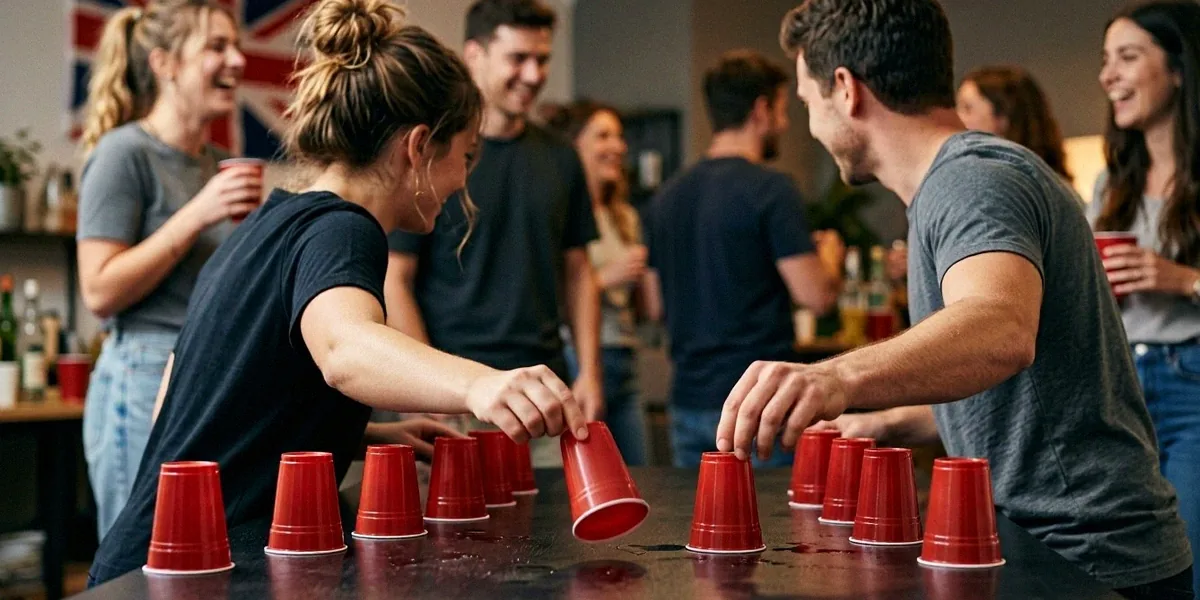
The core game is simple: two teams, even numbers on each side, and a race to drink and flip. Every player has a cup with a small, equal measure of drink inside — a splash of lager is traditional, and a supermarket own-brand four-pack is perfect for practice nights because nobody minds wasting it. On “go”, the first player on each team drinks, places the cup on the edge of the table with a bit hanging over, and flicks it so it lands upside down. Once it lands, the next teammate starts. First team to finish every cup and land the final flip wins.
Setting Up Teams and the Table
Split into two teams of equal size and line up behind opposite ends of a long table. Each player needs their own cup, so a 12-person game means 12 cups. A standard pint glass works, but cheap plastic cups are safer and easier to flip. Fill each cup with the same amount — roughly a third of a pint is a fair standard — so nobody gets an unfair advantage. If your table is too short for the crowd, IKEA trestle tables are a cheap way to extend the playing field and keep everyone in the action.
The Flip Technique and Legal Moves
The flip itself is where games are won and lost. Place the cup right on the table edge with about a third overhanging, then use one finger to flick the base upward. The cup should rotate once and land mouth-down. Legal flips must start from the table edge, not from your hand in mid-air, and you can’t touch the cup after it leaves the surface. If it lands on its side or bounces off the floor, that’s a re-flip — no penalty beyond the time you’ve just lost.
Winning the Race and Common Fouls
The anchor leg — the last player in each line — decides the game. Their flip has to land cleanly for the team to win. Common fouls to watch for include:
- Drinking before the previous teammate’s cup has landed
- Flipping with two hands or pushing the cup rather than flicking it
- Leaving too much drink in the cup, which makes the flip almost impossible
- Stepping past the table edge to gain an advantage
Agree on foul penalties before the first round — a re-flip or a one-cup handicap usually does the job.
Team Variations to Handle Bigger Groups
Standard flip cup caps out around eight to ten players before people start standing around cold and bored. These variations keep everyone involved when the party swells.
Relay Flip Cup for 12+ Players
Instead of one player per cup, run relay-style rounds where each team splits into sub-teams of four. Two tables run side by side, and the winners of each heat advance. With 12 or more players you can run three tables at once, rotating the losing team off and the waiting team on. IKEA trestle tables are ideal here because you can set up multiple lanes in a garden or garage without spending a fortune.
Round-Robin Tournament Format
For a longer evening, run a round-robin where every team plays every other team once. Keep a simple league table on a whiteboard or a notes app. Each match is best of three, and the top two teams play a final. This format works brilliantly for 16 to 24 guests because nobody sits out for long, and the competitive edge builds through the night.
Anchor vs. Rotating Anchor Rules
In standard play the anchor is fixed, which means the same person carries the pressure every round. Rotating anchors — where the anchor position shifts one place down the line each game — spreads the tension and stops one player becoming the permanent scapegoat. For tournaments, a fixed anchor adds drama; for casual house parties, rotating keeps it friendly.
Garden Party and Outdoor Flip Cup Adaptations
British weather is a gamble, but a garden party with flip cup is worth the risk. Grass, wind and uneven surfaces all change the game, so plan accordingly.
Cup Choices for Outdoor Surfaces
Light plastic cups blow away and bounce unpredictably on grass. Use heavier plastic tumblers or reusable cups with a bit of weight — they flip more consistently and survive drops onto patio stones. Avoid glass entirely outdoors; bare feet and broken pints are a bad combination.
Windy Day Fixes and Weighted Cups
Wind is the enemy of a clean flip. Add a small amount of water to the base of each cup before play to weigh it down, or set up behind a windbreak. If it’s really blowing, move the game onto a sheltered patio or into the garage. Always have a backup indoor plan — a foldaway table in the living room has saved many a washed-out garden party.
Keeping the Game Safe in the Garden
Check for uneven slabs, garden toys and trip hazards before you start. Keep the playing area clear of glass, and make sure anyone who’s had a few isn’t flipping near a pond or a barbecue. A quick two-minute walkthrough of the space prevents most accidents.
Party Gadgets That Improve Flip Cup
A few cheap gadgets make flip cup run smoother, especially with big groups. Amazon UK and Argos both stock everything on this list, usually for under £20.
Table and Cup Accessories
Folding tables with a hard, flat surface are essential — flimsy picnic tables ruin flips. Cup rinsers save time between rounds, and coloured cup markers stop the “whose cup is this?” argument that derails every large game.
Scorekeeping Apps and Timers
A phone timer keeps rounds honest, and a simple scorekeeping app tracks tournament results without a pen and paper. For round-robin formats, a bracket app is worth the two minutes of setup.
Cleaning and Hygiene Gadgets
With shared cups and big groups, hygiene matters. A bottle of sterilising solution, a stack of clean cloths and a small bin near the table keep things tidy. If you’re reusing cups between rounds, rinse them properly — nobody wants a warm, sticky cup on their second turn.
House Party Ideas to Pair with Flip Cup
Flip cup works best as part of a bigger night. Pair it with other party games to keep energy up between rounds.
Beer Pong and Flip Cup Combo
Run beer pong first, then flip cup as the finale — the two games share a table and a crowd. If you’re new to beer pong, check our full beer pong rules guide before you set up. The combo gives you a natural tournament structure across the evening.
Relay Races and Team Challenges
Add relay races, balloon challenges or card games between flip cup rounds. UK party game brands like Hasbro and Big Potato Games make quick-fire titles that slot in perfectly when you need a breather from the table.
Non-Alcoholic Options for Inclusive Play
Not everyone drinks, and flip cup works just as well with water, squash or soft drinks. Set up a separate non-alcoholic lane so everyone can play on equal terms. It keeps the game inclusive and means designated drivers aren’t left on the sidelines.
Safety, Fair Play, and House Rules
Flip cup is a drinking game, so safety has to come first. A few simple rules keep the night fun and stop things getting out of hand.
Setting House Rules Before You Start
Agree on cup sizes, drink measures, foul penalties and a finish time before the first flip. Write them on a card or pin them to the group chat so there’s no mid-game debate. Clear rules prevent most arguments.
Managing Alcohol and Water Breaks
Alternate alcoholic and soft drinks, and put a water jug on the table. Drinkaware UK has straightforward guidance on pacing, units and recognising when someone’s had enough — worth a read before you host. Take a proper break every three or four rounds.
Resolving Disputes Fairly
Appoint a neutral referee for tournaments, ideally someone not playing. Their call is final on flips, fouls and finishes. For casual games, a quick re-flip settles almost everything without bad feeling.
FAQ
How many players do you need for flip cup?
You can play with as few as four — two per team — but the game works best with six to twelve. For bigger groups, use relay or round-robin formats to keep everyone involved.
Can you play flip cup with non-alcoholic drinks?
Absolutely. Water, squash and soft drinks flip exactly the same way. Many hosts run a non-alcoholic lane alongside the main game so everyone can take part.
What’s the best cup for flip cup?
Cheap plastic cups are the classic choice, but heavier reusable plastic tumblers flip more consistently, especially outdoors. Avoid glass, particularly in the garden.
How do you stop the cup from sticking when it lands?
A clean, dry rim helps, and using the same amount of liquid in every cup keeps flips predictable. If a cup keeps sticking, swap it out — worn or cracked cups behave badly.
Where can I buy flip cup accessories in the UK?
Amazon UK and Argos both stock folding tables, cup sets, rinsers and timers. IKEA is the go-to for cheap trestle tables if you need extra playing space.
Flip cup isn’t really about speed — it’s about laughter, teamwork and the moment your anchor leg lands a perfect flip while the whole garden erupts. Tweak the rules to suit your crowd, keep safety and inclusivity front of mind, and you’ll have a house party game that people are still talking about the next morning.




Post Comment